
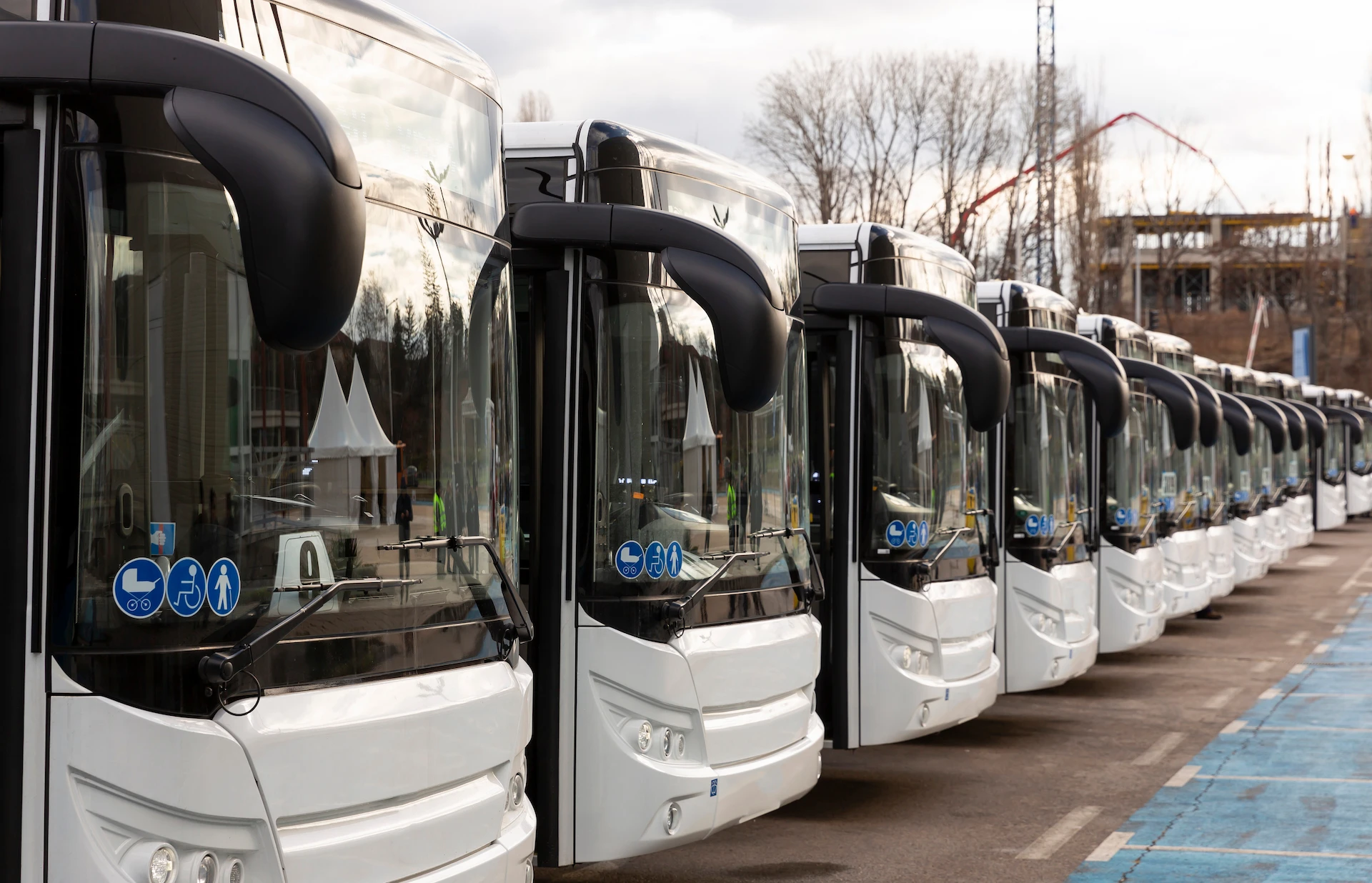
Range anxiety is the most cited concern among transit agencies evaluating the shift from diesel to electric buses. A bus that cannot complete its assigned route on a single charge, or that falls short on cold winter days, creates operational problems that are expensive to solve after the fleet is purchased. Every program team working on an electric bus platform is looking for weight to remove.
Glazing is not the first place most engineers look. The battery pack, the powertrain, and the structural body are where the big weight numbers live. But glazing is one of the few systems on a transit bus where a material substitution replaces a heavy component with a lighter one without changing anything else about the vehicle architecture. The weight comes off the vehicle, the range goes up, and no other system is affected.
Here is how the numbers work, and why polycarbonate glazing belongs in the weight reduction conversation for every electric bus program.
The Weight Carried by a Transit Bus Glazing System
A full-size 40-foot transit bus carries a substantial glazing load. Front destination windows, driver windshield, multiple side windows along both passenger rows, rear windows, and any roof or upper-deck glass in articulated configurations add up to a glazing inventory that varies by bus model but typically falls in the range of 200 to 400 pounds of total glazing weight for a standard single-deck bus.
The exact number depends on the number of window positions, the size of each pane, and the glazing thickness specified. Glass transit windows are typically 5 mm to 8 mm thick to meet safety and acoustic requirements. Polycarbonate provides equivalent or superior safety performance at similar or lesser thickness, at roughly half the weight per unit area.
Taking 300 pounds as a representative glazing weight for a full-size bus glazed in standard safety glass, a full conversion to polycarbonate brings that figure to approximately 150 pounds, a reduction of 150 pounds per vehicle. On a 40-foot bus with a loaded gross vehicle weight in the range of 40,000 pounds, that 150-pound reduction represents approximately 0.375% of vehicle weight.
That percentage sounds small. Multiplied across a full duty cycle, it is not.
What Weight Reduction Does to Range
The relationship between vehicle weight and energy consumption is well established in automotive and transit engineering. The U.S. Department of Energy[1] documents the general relationship: reducing vehicle weight by 10% improves fuel efficiency by 6 to 8% in conventional powertrains. The relationship in battery-electric vehicles is somewhat different but follows the same directional logic. Less mass requires less energy per mile to move.
For a battery-electric bus, weight reduction improves range in two ways. First, the energy required to accelerate the vehicle from a stop is proportional to its mass. Transit buses make frequent stops, so the acceleration energy demand accumulates across a route. A lighter vehicle uses less energy per stop-and-go cycle. Second, rolling resistance, which accounts for a meaningful share of energy consumption at city transit speeds, scales with vehicle weight. A lighter bus rolls with less resistance on flat terrain and demands less energy from the battery pack on grades.
The magnitude of range improvement from a 150-pound glazing weight reduction depends on the specific bus platform, battery pack size, route profile, and operating conditions. A conservative estimate based on the energy-weight relationship in electric vehicles suggests that a 150-pound reduction on a 40,000-pound bus improves efficiency by roughly 0.5 to 1%. For a bus with a rated range of 150 miles, that translates to 0.75 to 1.5 additional miles per charge from glazing alone.
That number is worth putting in context. Range shortfalls in cold weather or on hilly routes are often measured in single-digit miles per charge. A glazing weight reduction does not solve a fundamental range problem, but it reliably closes part of the gap, and it does so permanently, on every trip the bus makes, for the full service life of the vehicle.
The Fleet Multiplication Effect
Individual bus range improvement is useful. The same numbers applied across a transit fleet make a different kind of argument.
A transit agency operating 200 electric buses, each carrying 150 pounds of glazing weight that could be replaced with polycarbonate, is carrying 30,000 pounds of excess glazing weight across the fleet. The energy cost of moving that weight adds up across millions of revenue miles annually.
The American Public Transportation Association[2] reports that a large transit bus operates approximately 40,000 to 60,000 miles per year in typical urban service. For an agency running 200 buses at 50,000 miles per year each, the fleet accumulates 10 million revenue miles annually. At a 0.75% efficiency improvement from lighter glazing, the energy savings across that fleet over a year is meaningful, and the savings repeat every year for the 12 to 15-year service life of the vehicles.
This is the calculation that fleet managers and procurement teams working through total cost of ownership for electric fleet transitions should include. The per-vehicle glazing cost premium for polycarbonate over glass is real. The energy savings over the vehicle lifetime, when the fleet runs on grid electricity at a known cost per kilowatt-hour, can be quantified and compared directly against the upfront cost difference.
Battery Sizing Implications
The weight argument extends beyond range at a given battery size. For electric bus programs where the battery pack size has not yet been finalized, lighter glazing creates an opportunity to reduce battery pack size while maintaining the range target.
Smaller battery packs cost less, weigh less themselves, and reduce the structural reinforcement required to support them. The weight reduction cascades: lighter glazing reduces required battery capacity, which reduces battery weight, which reduces required structural support, which reduces vehicle weight further. The cascade effect is small for any single component change, but it is real, and glazing weight reduction is one of the inputs.
For OEM engineering teams working to hit a range target at the lowest possible vehicle weight and cost, polycarbonate glazing is a straightforward contribution that does not require changes to the powertrain, battery chemistry, or vehicle architecture.
What Polycarbonate Transit Windows Require from a Platform Design
Polycarbonate is not a drop-in replacement for glass on a bus platform designed around glass-specific mounting systems. Three platform design considerations apply when specifying polycarbonate for an electric bus program.
Mounting and gasket design needs to account for polycarbonate's coefficient of thermal expansion, which is higher than glass. Windows need to float within their mounting to accommodate movement across the operating temperature range. This is standard practice in polycarbonate window design and does not add complexity to the cab structure, but it does require the mounting design to be specified correctly from the start.
Acoustic performance is a real consideration for transit vehicles where passenger comfort is a design requirement. Polycarbonate transmits slightly more sound than glass at equivalent thickness. For programs where acoustic performance is a priority, laminated polycarbonate configurations or increased thickness can close this gap. Five Star's engineering team can review acoustic requirements as part of the glazing specification process.
Cleaning protocol matters for coating longevity. Transit buses go through automated bus washes and manual cleaning cycles regularly. Cleaning agents and brushes that are appropriate for glass can be aggressive on polycarbonate coatings that are under-specified for the cleaning environment. Fusionite CGII and CGIII both carry wiper and chemical resistance data, and confirming the cleaning protocol with the glazing supplier at the specification stage avoids coating degradation in service.
Certification Requirements for Electric Bus Glazing
Polycarbonate windows on federally funded electric buses need to meet the same certification standards as any transit glazing. ANSI Z26.1[3] governs safety glazing classification. Five Star's polycarbonate windows meet this standard.
For programs selling into European markets or operated under European transit authority standards, ECE R43 certification applies. Five Star holds ECE R43 certification, making its windows available for European electric bus programs that require this standard.
ISO 9001:2015 manufacturing certification since 2014 provides the quality management documentation that transit OEM procurement programs typically require from glazing suppliers.
Where Polycarbonate Glazing Fits in an Electric Bus Program
The weight reduction from polycarbonate glazing is not large enough to rescue an electric bus program with a fundamentally undersized battery pack. It is a real, predictable, permanent improvement that belongs in the weight budget of any electric bus program and in the total cost of ownership analysis for any transit fleet evaluating the switch.
Five Star Fabricating supplies polycarbonate transit windows for bus OEMs from its facilities in Twin Lakes, Wisconsin. The full product line covers front destination windows, side windows, rear windows, and composite interior panels, in both standard and custom configurations for new platform programs. Engineering teams can request prototype windows within two weeks for fit and integration validation.
For transit agencies evaluating fleet conversion, Five Star's engineering team can provide weight comparison data, coating specification recommendations, and certification documentation to support the procurement decision.
Contact our engineering team to discuss glazing specifications for your electric bus program.