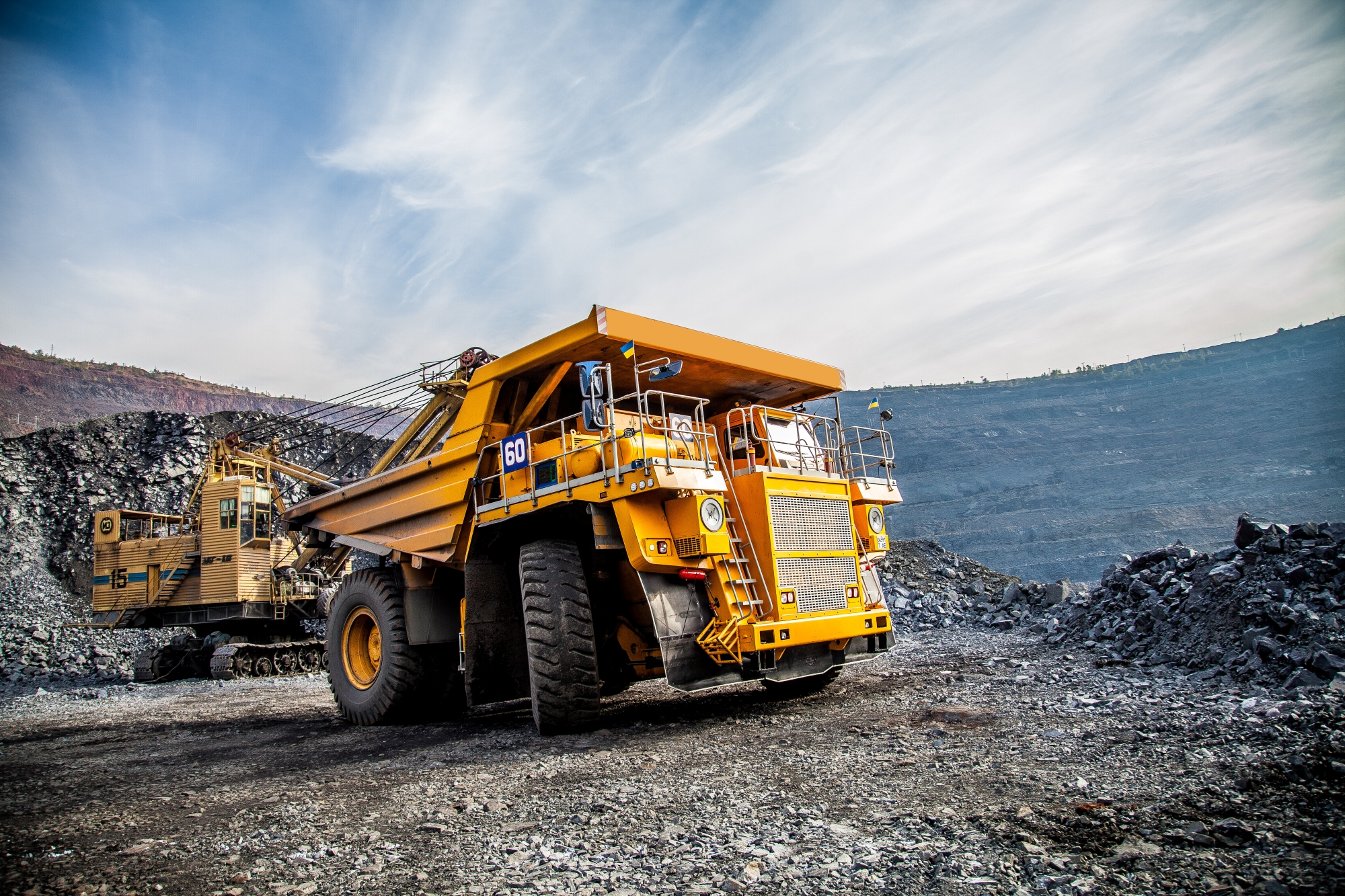
Surface mining operations (open pit mines, quarries, and surface coal operations) put cab windows through a combination of exposures that few other applications match. Operators run equipment through blasting zones, haul roads carrying fine particulate, and maintenance areas where hydraulic fluid, diesel fuel, and cleaning agents contact every surface including the glass.
Silica dust is the primary abrasion threat. Crushed rock generates respirable silica particulate, and that particulate is carried in the cab ventilation airstream and deposited on window surfaces. Wiper cycles abrade the particulate across the surface repeatedly. On uncoated polycarbonate, this produces surface haze measurable within weeks of service. On glass, the same particulate scratches the surface over time but at a slower rate because glass surface hardness is higher than uncoated polycarbonate.
Chemical exposure compounds the optical problem. Hydraulic fluid contact degrades uncoated polycarbonate through crazing: a network of subsurface microcracks that scatter light and reduce optical clarity without leaving a visible surface mark. Diesel fuel and petroleum distillates produce similar crazing. Acid contact from battery maintenance, blasting residue, and mine drainage creates surface etching that cannot be polished out. None of these failure modes require a large volume of chemical contact; even splash and wipe events are enough to initiate degradation in uncoated or incorrectly coated material.
Impact is the third exposure category, and it carries direct safety consequences. 30 CFR Part 56[1], the MSHA[2] safety standard for surface metal and nonmetal mines, requires that equipment be operated in a manner that protects the operator from hazards including falling and flying objects. Cab glazing is part of that protection system. In blasting zones, debris travel distances and energy levels are significant. A window that fractures under impact does not just require replacement; it removes the barrier between the operator and the blast environment.
Why Polycarbonate Is Specified for Mining Cabs
Polycarbonate has two properties that make it the correct base material for mining cab glazing. First, it does not fracture the way glass does. Tempered glass releases stored energy when it breaks, shattering into fragments. Polycarbonate deforms plastically under impact, absorbing energy without producing fragments. For a mining haul truck operator, the difference between a deformed window and a shattered one is significant.
Second, polycarbonate is roughly half the weight of glass at equivalent thickness. On equipment where cab frame load paths and door hinge specifications are tightly engineered, glazing weight is an engineering input. Replacing glass with polycarbonate at equivalent or greater impact performance reduces door weight and seal compression loads across the full equipment platform.
Five Star produces polycarbonate glazing for mining haul trucks, scalers, front-end loaders, bulldozers, and articulating trucks. The heavy equipment applications page covers the full vehicle type range. All production runs through Five Star’s CNC machining center on 3, 5, and 6-axis equipment, with thermoforming handled across five on-site ovens for complex compound-curve windshields.
Addressing Dust and Abrasion: The Coating Specification
The abrasion problem in mining is a coating specification problem, not a polycarbonate base material problem. Uncoated polycarbonate has a Pencil hardness of approximately 2H and will accumulate surface haze rapidly under wiper contact with silica-laden particulate. The correct specification applies a hard coat that increases surface hardness and reduces haze accumulation to a rate the window can sustain across its intended service interval.
Haze is measured per ASTM D1003[3], which quantifies the percentage of transmitted light that is scattered more than 2.5 degrees from the incident beam. For operator visibility in a mining cab, haze above 2% is perceptible, and haze above 5% creates meaningful visibility impairment in low-light conditions such as early morning shifts, haul tunnel operations, and dust-heavy environments.
Abrasion resistance is measured per ASTM D1044, which runs a Taber abraser across the coated surface for a specified number of cycles and measures haze increase. Five Star’s Fusionite CGIII coating achieves less than 2% haze increase at 1,000 cycles, which represents the performance level appropriate for high-abrasion mining service environments where wiper frequency is high and particulate is coarse.
The coating is applied to polycarbonate sheet in Five Star’s coating facility, which handles flat, pre-contoured, and complex surface geometries up to 8 feet by 11 feet. All coated production is validated through Five Star’s in-house lab, which runs ASTM D1003 optical testing and ASTM D1044 abrasion testing as standard quality controls.
Chemical Resistance: What the Coating Must Withstand
Chemical resistance in mining glazing is primarily a coating chemistry question. The base polycarbonate is vulnerable to crazing from aromatic solvents, petroleum distillates, and strong acids. A correctly formulated hard coat creates a barrier layer that prevents direct chemical contact with the polycarbonate substrate.
Five Star’s Fusionite coating line is engineered for chemical resistance to hydraulic fluids, diesel fuel, mine drainage, and industrial cleaning agents. Chemical resistance validation follows ASTM D1308, which tests the effect of chemical exposure on the coated surface. For mining applications where the specific chemical exposure profile is known, Five Star can test against the exact chemicals present in the service environment before production begins.
The specification decision for chemical resistance is whether the coating grade matches the exposure frequency and chemical type. Standard hard coat grades are adequate for incidental splash and wipe events. High-abrasion environments where chemical cleaning compounds are used daily at elevated concentration require a coating grade validated against those specific agents. Five Star’s engineering team conducts specification reviews that include chemical exposure profiling before coating grade selection is finalized.
Impact Ratings: What the Standards Require
Impact resistance for mining cab glazing is validated per ASTM D256[4] for Izod pendulum impact, and per Five Star’s internal cannon and ball drop testing protocols for application-specific projectile and debris scenarios. ASTM D256 places unnotched polycarbonate at 12 to 16 ft-lb/in, which is at the upper range of engineering thermoplastics and orders of magnitude above the fracture toughness of glass.
Thickness selection for impact resistance in mining follows the same logic as other heavy equipment applications: specify based on the energy of the worst-case impact event, not based on the visual dimension of the glass panel being replaced. For mining haul trucks operating in active blasting zones, worst-case energy calculations should account for debris fragment mass and velocity at the cab position, not just rock chip contact from normal haul road conditions.
Five Star’s lab runs projectile and multiaxial impact testing per ASTM F22, ISO 6603-2, SAE J1615, and FMVSS 205 S5.3, in addition to internal cannon testing. For OEM engineers writing glazing specifications for new mining equipment platforms, this testing infrastructure supports thickness validation against the specific energy levels present in the application rather than defaulting to catalog thickness recommendations.
Underground Mining: Additional Considerations
Underground mining equipment faces the same three exposure categories but with additional constraints. Cab dimensions are tighter, lighting is controlled rather than solar, and ventilation airflow carries higher concentrations of diesel exhaust particulate and blasting residue in enclosed drift environments.
The chemical exposure profile in underground operations frequently includes a higher concentration of ammonium nitrate compounds from blasting agents and water-based drilling fluids that contain surfactants. Both interact with uncoated polycarbonate. The coating specification for underground applications should account for these specific agents rather than assuming that a standard automotive-grade hard coat provides adequate protection.
Impact events in underground operations include rock fall from the drift ceiling, equipment contact in confined maneuvering, and in some operations, controlled blasting at close distances. The glazing specification for underground loaders, scalers, and bolters should be developed against the actual operating geometry of the machine in the drift, not a generic mining equipment specification.
Specification Checklist for Mining Glazing
For engineers writing polycarbonate glazing specifications for mining equipment platforms:
Identify the three exposure categories present in the specific application: abrasive particulate type and concentration, chemical agents and contact frequency, and impact energy at the cab position during normal and blasting operations.
Select coating grade based on the abrasion and chemical exposure profile. Fusionite CGII (less than 3% haze at 500 Taber cycles) for standard surface mining equipment. Fusionite CGIII (less than 2% haze at 1,000 cycles) for high-abrasion or high-frequency wiper use environments. Validate against site-specific cleaning agents before committing the specification.
Select thickness based on the impact energy requirement for the worst-case event at the operator position, not the replacement dimension of the existing glass. Request impact test data for the specified thickness from Five Star’s lab before production.
Five Star’s engineering and design team works from DXF and STEP geometry files and can support glazing specification development from the design stage through production validation. Prototype lead time from geometry to first article is two weeks.
Contact
Contact Five Star Fabricating to discuss glazing specifications for your mining equipment platform, or to request test data for a specific coating grade and service environment.
Twin Lakes, WI: +1 (262) 877-2171
Submit a quote request or learn more about heavy equipment glazing capabilities at fivestarfabricating.com/applications/earth-moving.
References
- 30 CFR Part 56: Safety and Health Standards, Surface Metal and Nonmetal Mines
- Mine Safety and Health Administration (MSHA): Regulations and Standards
- ASTM D1003-21: Standard Test Method for Haze and Luminous Transmittance of Transparent Plastics
- ASTM D256-23: Standard Test Method for Izod Pendulum Impact Resistance of Plastics
Write a Comment