

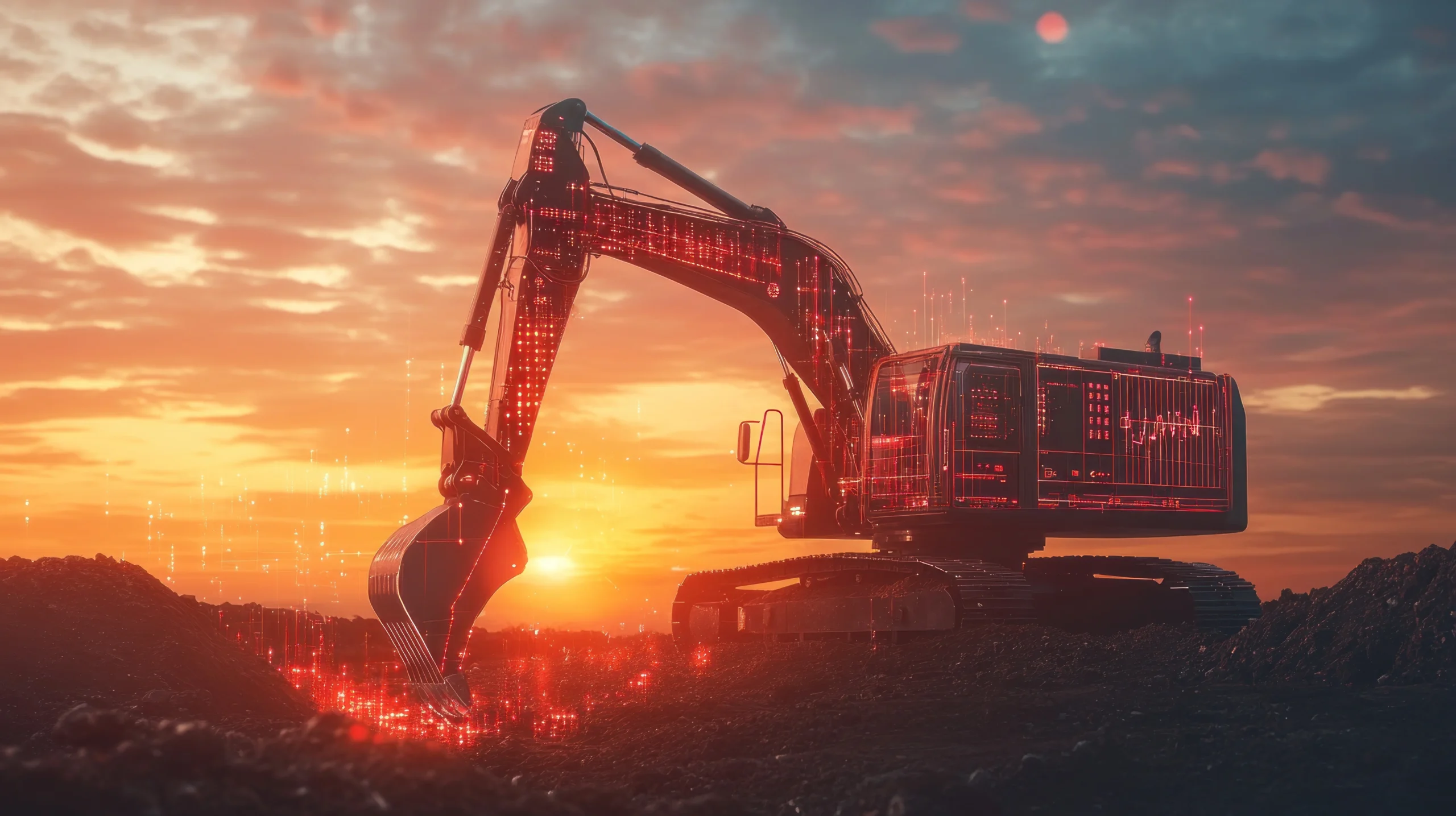
The construction industry is undergoing a transformation, shifting from traditional, labor-intensive practices to highly efficient, data-driven ecosystems. This change, powered by automation and advanced earth-moving technologies, brings significant benefits to both Original Equipment Manufacturers (OEMs) and their customers.
Why Construction Digitization is No Longer Optional
The construction sector faces persistent challenges such as cost overruns, project delays, and safety concerns. Construction digitization directly addresses these issues, converting traditional machinery into smart, connected assets.
The Core Technologies Driving Smart Machinery
The foundation of this digital shift is an integrated suite of advanced technologies:
Telematics & IoT
Often referred to as the “nervous system” of modern machinery, telematics and IoT systems track essential machine metrics such as operation hours, location, and fuel consumption. They enable predictive maintenance by monitoring health in real time.
GPS & Machine Control
GPS and machine control systems deliver centimeter-level precision, ensuring that dozers, graders, and excavators operate exactly as intended. These systems minimize errors, reduce rework, and guarantee that projects are executed with the highest accuracy.
Sensors & LiDAR
Acting as the “eyes” of the machine, sensors and LiDAR generate 3D maps of the worksite, detect obstacles, and provide real-time data, enabling seamless automated operations and optimizing workflow.
Solving the Durability Challenge with Advanced Materials
Traditional materials simply can’t meet the demands of modern, digital construction equipment. Steel enclosures are heavy and often interfere with GPS and IoT signals, while standard glass provides minimal protection for vulnerable sensors.
Enter advanced materials. High-performance thermoplastics and composites offer a unique blend of impact strength, low weight, design flexibility for environmental seals, and excellent signal transparency, making them ideal for protecting the digital systems driving smart machinery.
How Five Star Fabricating Enables Advanced Digitization
Digital systems must perform reliably in harsh environments. That requires durable, precisely engineered protection. Five Star Fabricating designs and manufactures components that help OEMs deploy these systems with confidence.
Durable Polycarbonate Windows and Glazing
- Challenge: Onboard technologies like GPS, LiDAR, and cameras require clear, unobstructed views, yet are highly vulnerable to debris, impacts, and harsh weather conditions.
- Solution: Impact resistant, optically clear polycarbonate windows from Five Star Fabricating.
- Feature-to-Benefit: Our polycarbonate windows are engineered to safeguard sensitive equipment while ensuring maximum sensor clarity. Advanced hydrophobic and scratch-resistant coatings keep the windows operational in the toughest conditions, maintaining the integrity of automation and machine control systems.
Custom Thermoformed Enclosures and Housings
- Challenge: Key components like IoT gateways, control modules, and battery systems need to be shielded from dust, moisture, and vibration.
- Solution: Custom-molded thermoformed plastic enclosures provide the ideal solution to protect these sensitive components.
- Feature-to-Benefit: We design durable, lightweight enclosures that are precision-molded and sealed to safeguard against environmental contaminants. This ensures the longevity and reliability of the essential digital systems within construction machinery.
Five Star Fabricating provides specialized protection so advanced technology can perform reliably in demanding field conditions.
The Benefits for OEMs and End-Users
When properly protected, the advantages of automated construction machinery are undeniable:
- Enhanced Safety: Automation removes operators from hazardous environments, while sensors help prevent collisions, significantly improving on-site safety.
- Increased Productivity: Automated machines can work with greater precision, reducing rework and accelerating timelines, which boosts overall productivity.
- Solving Labor Shortages: Autonomous machinery complements human labor, allowing operators to manage fleets rather than individual machines, addressing workforce challenges in the construction industry.
Automation in construction offers a trifecta of strategic benefits: it significantly enhances on-site safety, drives productivity through increased precision, and provides a scalable solution to the labor shortages impacting the industry.
From Operator-Assist to Full Automation in Construction
At the heart of this transformation is automation. What begins with operator-assist systems, like grade control, evolves into semi-autonomous and fully autonomous machines capable of performing repetitive tasks 24/7. This shift toward automation is a key value proposition for OEMs and technology integrators, pushing the design of fully connected and automated worksites.
Frequently Asked Questions: Digitization and Earth-Moving
It is the integration of technologies such as IoT, GPS, and data analytics into construction projects to make equipment smarter and more efficient.
Build Smarter, Connected Construction Machinery with Advanced Materials
As construction sites evolve into connected, automated ecosystems, OEMs must protect the technologies driving this transformation. Five Star Fabricating engineers lightweight, impact-resistant, signal-transparent components that safeguard sensors, LiDAR, cameras, GPS hardware, and IoT systems, ensuring digitized machinery performs reliably in the field.