
- Home
- News & Blogs
- Robotics
Outdoor Autonomous Systems: UV and Weather Resistance in Polycarbonate Enclosures
Sun, temperature swings, moisture, and cleaning all work against the sensor windows an outdoor robot navigates by. Specifying those windows means reading weathering data for what it can and cannot predict.
In This Article
Delivery robots, agricultural robots, autonomous construction equipment, and security robots all carry sensor windows and enclosure panels that spend their service life outdoors. Those windows sit in the optical path of the cameras and LiDAR units the machine navigates by, so any loss of clarity from sun, weather, or cleaning shows up as degraded sensor data.
The optical basics of sensor windows are covered in Sensor-Safe Polycarbonate: What Robotics Engineers Need to Know About LiDAR Windows. Outdoor service adds UV, temperature swings, moisture, and frequent cleaning, and each of those can push a window specified for indoor use past what its coating was tested for. This post covers how those exposures degrade polycarbonate, how to read weathering data, what the Fusionite data sheets report by grade, and a checklist for outdoor robot enclosures.
How Outdoor Exposure Affects Polycarbonate Sensor Windows
UV
Uncoated polycarbonate yellows under UV exposure, and the yellowing comes with lower light transmission and surface embrittlement. Yellowing cuts visible transmission most, which matters for cameras. Haze and surface microcracking scatter light across the visible and near-infrared range and degrade LiDAR returns. Any polycarbonate window in outdoor service needs UV protection, which on coated parts comes from a weatherable hard coat.
ASTM D1435, the standard practice for outdoor weathering of plastics, notes that the relative durability of plastics outdoors can differ widely by location because of differences in UV radiation, time of wetness, temperature, and pollutants.[1] The rate of degradation depends on where the robot works.
Temperature Swings
Polycarbonate's linear thermal expansion coefficient is about 65 to 70 × 10⁻⁶ per °C, roughly three times the 23 × 10⁻⁶ per °C listed for aluminum.[2] A window clamped tightly into an aluminum housing builds stress each time the robot moves between a cold morning and a hot afternoon. That stress concentrates at mounting points and edges, which is also where cracking and chemical attack tend to start.
Moisture and Cleaning
Rain and washdown carry grit across the window surface, and a sealed sensor housing that cools quickly can fog on the inside of the window, blocking the sensor until it clears. Outdoor sensor windows are cleaned by integrated wipers and washer sprays or by operators wiping off dust, and each cleaning pass drags abrasive particles across the surface.
Reading Weathering Data for Outdoor Robot Windows
Outdoor exposure per ASTM D1435 places specimens outside for months or years. The standard itself cautions that results from one location cannot be assumed to apply at a different location, and that a single exposure test cannot predict the absolute rate at which a material degrades.[1] Multi-year outdoor data is still the closest available proxy for field service.
Accelerated weathering shortens the test by using fluorescent UV lamps per ASTM G154 or xenon arc lamps per ASTM G155.[3] ASTM G154 states that its exposures are not intended to simulate deterioration from localized weather phenomena such as atmospheric pollution, biological attack, and saltwater exposure, and that results from different apparatus models should not be compared unless correlation has been established.[4]
Accelerated weathering ranks coatings against each other under the same conditions. It does not predict years of service on a specific robot in a specific climate.
For a sensor window, the property that matters most after exposure is transmission at the sensor's operating wavelength, which for many LiDAR units is in the near-infrared rather than the visible range.
Fusionite UV and Weathering Data by Grade
The results below are taken directly from the Fusionite data sheets.[5]
The data sheet describes CGII as a weatherable hard coat offering "the best weather (UV) resistance performance in the industry." It reports five years of Florida outdoor exposure (5 degrees south, clear) per ASTM D1435 at 2.1% haze and 1.8 yellowness index, and accelerated weathering (15,000 kJ, clear) per ASTM G155 Modified at below 8% haze and below 2 yellowness index.
The data sheet reports four years of Florida outdoor exposure (45 degrees south, clear) per ASTM D1435 at below 4% haze and below 4 yellowness index.
A formable, weatherable, and abrasion-resistant hard coat that can be cold or thermally formed. It reports Taber delta haze on formed parts of below 6% at 100 cycles and below 13% at 500 cycles per ASTM D1044, and accelerated weathering (15,000 kJ, clear) per ASTM G155 Modified at 10% haze and 4 yellowness index.
Described as best-in-class abrasion-resistant hard-coated polycarbonate offering AS2 abrasion resistance. It reports Taber delta haze below 2% at 1,000 cycles per ASTM D1044 and wiper abrasion below 2% after 20,000 cycles per ISO 5685. Its UV stability section lists a pass on ANSI Z26.1 resistance to UV exposure and no outdoor exposure results.
A coated product with long-term anti-fog properties, very good chemical resistance, moderate abrasion resistance, and formability. It reports fog-free performance for more than two minutes at 60°C, Taber delta haze below 30% at 100 cycles, and that it meets EN-166:2001 protective eyewear requirements for anti-fog, falling sand abrasion, and UV resistance. It lists no outdoor weathering results.
The CGII, CGIII, CGFII, and CGAF data sheets list light transmission of 92% for clear material at 0.118 in. per ASTM D1003. None of the data sheets list near-infrared transmission.
Indoor and Outdoor Robot Enclosure Specifications Compared
An indoor AMR or AGV cover mostly faces impact from pallets and other equipment, abrasion from contact and cleaning, and chemical exposure from floor cleaners, with little UV load. AGV Protective Covers: Impact and Optical Requirements for Warehouse Robotics covers that environment.
An outdoor robot adds UV exposure, grit-driven abrasion from wipers and rain, condensation, thermal expansion at the mounting, and sealing against water and dust. Sealing is usually specified as an IP rating for the whole enclosure assembly, covered in more detail in Machine Vision Windows: Optical Requirements for Camera-Based Automation Systems.
Specification Checklist for Outdoor Robot Enclosures
For engineers specifying polycarbonate windows and enclosures for outdoor autonomous systems:
- Weathering data — request outdoor exposure data, and for accelerated data, the apparatus, cycle, and total exposure used.
- Post-exposure optics — request haze, yellowness index, and transmission at the sensor's operating wavelength after exposure, not only clear-state visible transmission.
- Abrasion — specify abrasion resistance for the cleaning method the robot will see, including wiper abrasion per ISO 5685 for windows with integrated wipers.
- Mounting — design the mounting to allow for thermal expansion, and confirm gaskets and sealants are compatible with polycarbonate.
- Condensation — use an anti-fog coating on the interior face, a breather vent that preserves the enclosure's IP rating, or both.
- Sealing — define the IP rating at the assembly level and validate it on the production enclosure.
Five Star's Outdoor Robotics Capabilities
Five Star Fabricating supplies polycarbonate solutions for robotics, including LiDAR domes and camera enclosures, with hard-coated surfaces, UV-stable formulations for outdoor durability, and sealed assemblies meeting IP65 and IP67 requirements. Domes and curved covers are formed in-house, and CNC machining on 3, 5, and 6-axis equipment handles apertures and mounting features.
- Light transmission and haze — ASTM D1003
- Taber abrasion — ASTM D1044
- Weathering — ASTM G154 and SAE J2020, through accredited partner labs
Details are on Five Star's lab testing capabilities[6] page. Custom prototypes are typically delivered within two weeks of initial consultation and CAD file submission, which allows window samples to go through sensor validation early in a program.
Sensor windows on an outdoor robot are specified against where and how the machine works: climate, cleaning method, mounting, and sensor wavelength. Sharing those conditions with Five Star early in a program allows coating data, weathering results, and window samples to be matched to the sensor before validation.
References
- ASTM D1435-20: Standard Practice for Outdoor Weathering of Plastics
- The Engineering ToolBox: Linear Thermal Expansion Coefficients of Materials
- ASTM G155: Standard Practice for Operating Xenon Arc Lamp Apparatus for Exposure of Materials
- ASTM G154-23: Standard Practice for Operating Fluorescent Ultraviolet (UV) Lamp Apparatus for Exposure of Materials
- Five Star Fabricating: Fusionite Data Sheets
- Five Star Fabricating: Lab Testing Capabilities
Related Reading
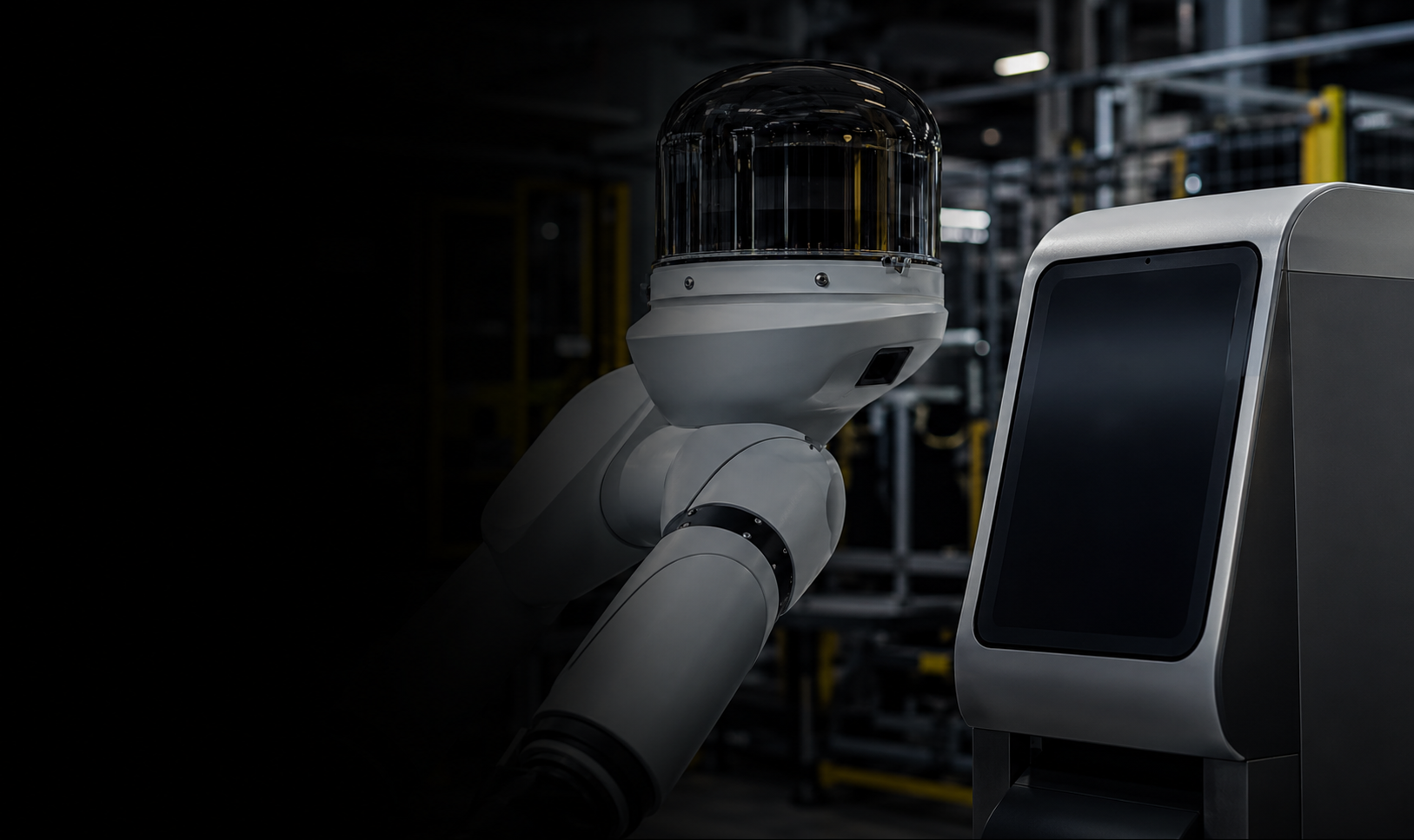 ApplicationRobotics SolutionsLiDAR domes, camera enclosures, body panels, and sealed assemblies for robotics OEMs.
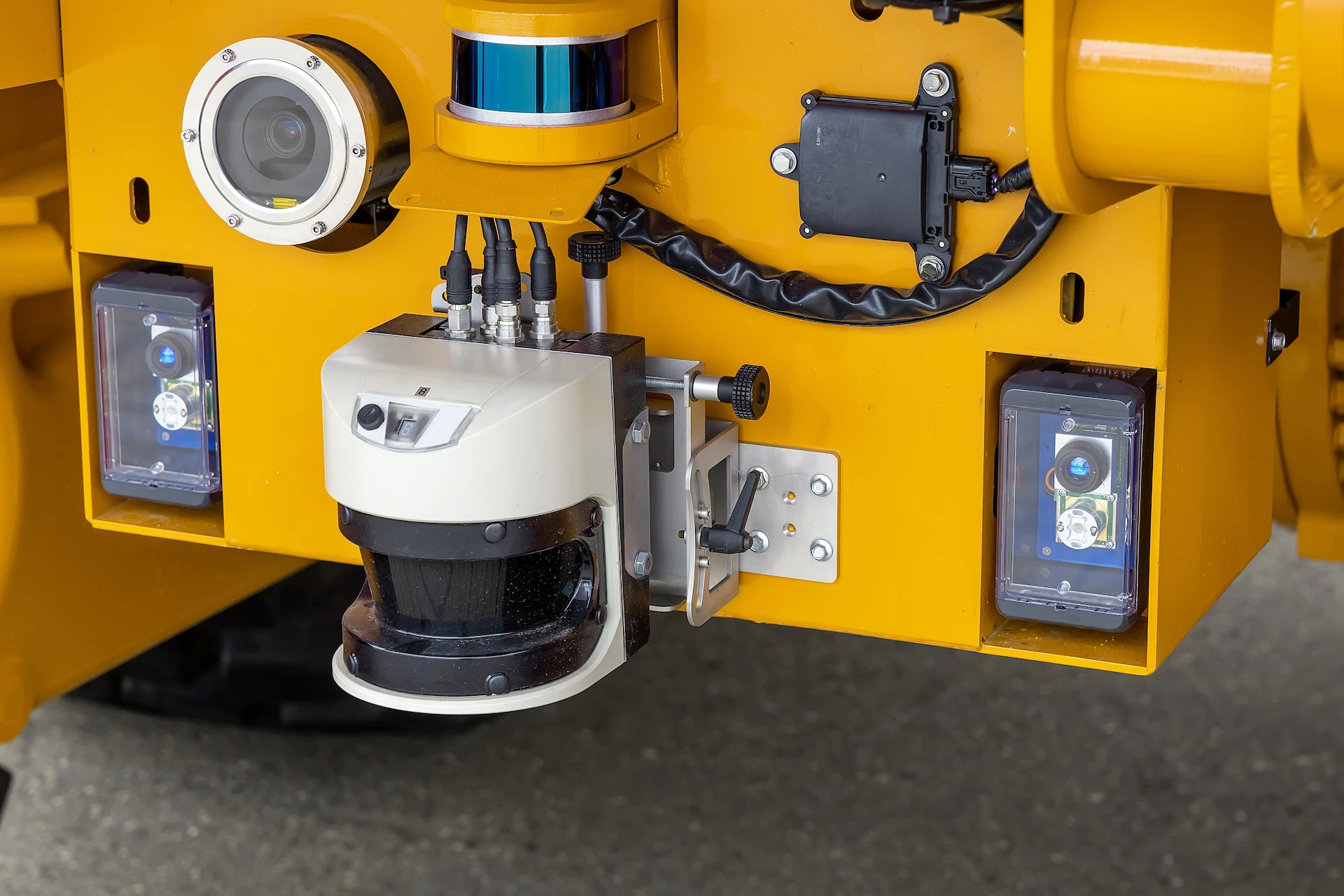 ArticleSensor-Safe PolycarbonateHow transmission, haze, and coatings affect LiDAR and camera performance.
 ArticleAGV Protective CoversImpact, chemical, and optical requirements for indoor warehouse robot covers.
Spec Your Outdoor Sensor Windows With an Engineer
Discuss glazing specifications for an outdoor robotics platform, or request test data for a specific coating grade and service environment.