
- Home
- News & Blogs
- Specification Guides
How Polycarbonate Thickness Affects Impact Resistance: A Specifier's Guide
Bending stiffness scales with the cube of thickness, so the relationship is real, but it is not linear, and thickness alone does not make a window meet the requirement. Where gauge, standard, and coating each carry their own part of the specification.
In This Article
When engineers specify polycarbonate glazing for heavy equipment cabs, machine guards, safety barriers, or transit windows, thickness is usually the first variable they reach for. More thickness means more impact resistance. That relationship is real. But it is not linear, and thickness alone does not determine whether a polycarbonate window meets the performance requirement for the application.
This post covers how thickness affects impact resistance in practice, what the relevant standards prescribe for different application categories, and where coating specification interacts with thickness selection in ways that procurement engineers consistently underestimate.
How Thickness Affects Impact Resistance
Polycarbonate's impact resistance advantage over glass begins at the material level. ASTM D256 notched Izod pendulum impact testing places polycarbonate at 12 to 16 ft-lb/in, effectively at the top of the scale for engineering thermoplastics and far beyond what tempered glass can absorb. Glass does not absorb impact energy by deforming. It releases it by shattering.
As thickness increases, a polycarbonate panel's resistance to out-of-plane loading increases through two mechanisms.
Bending stiffness increases with the cube of thickness. A 12mm panel is eight times stiffer than a 6mm panel of the same surface area.
First, that stiffness determines how far the panel deflects under a given load and how the load is distributed to the perimeter mounting. Second, energy absorption scales with material volume. A thicker panel has more material available to absorb and distribute impact energy before any point reaches the yield condition. The panel deforms rather than failing.
These relationships are why polycarbonate glazing for high-impact applications uses thicker gauges than the minimum required for optical clarity. The optical minimum might be achievable at 3mm. The impact requirement for a harvester cab windshield or a transit vehicle side window is not.
Thickness Specifications by Application Category
Common polycarbonate glazing thickness ranges across industrial applications reflect different impact risk profiles, not just different window sizes.
| Gauge | Typical Applications | Primary Specification Drivers |
|---|---|---|
| 3–4.5mm1/8"–3/16" | Face shields, light machine guards over low-energy hazards, instrument panel lenses | Optical clarity, UV stability, and surface hardness from coating. Impact loads are low relative to what the material absorbs at any thickness. |
| 6mm1/4" | Industrial machine guards, light-duty equipment glazing | Barrier guard intent for standard machine enclosures where flying chip or particle hazards dominate rather than high-energy projectile impacts. |
| 9.5–12mm3/8"–1/2" | Heavy equipment cab glazing: excavators, bulldozers, skid steers, articulating trucks | Stiffness and energy absorption sufficient to resist rock and debris impacts from bucket fill cycles, blade contact, and material handling. |
| 19mm+3/4"+ | Security glazing, blast-rated enclosures, ballistic-resistant applications | Panel weight becomes a significant engineering input, and forming process requirements change substantially. |
Five Star's heavy equipment polycarbonate windows, rated at impact resistance up to 250 times greater than glass, are produced across the 9.5–12mm range for most cab applications.
OSHA 29 CFR 1910.212's machine guarding requirements do not prescribe exact material thickness, but 6mm polycarbonate meets the barrier guard intent for most standard machine enclosures.
What the Standards Prescribe
FMVSS 205 governs glazing materials for motor vehicles and motor vehicle equipment. It incorporates ANSI Z26.1, which assigns each glazing material an item number (AS1, AS2, and so on). Each item number is permitted only in specific vehicle positions and carries its own optical, impact, and weathering test requirements, with windshields and other positions requisite for driving visibility held to the strictest requirements. Five Star produces glazing certified to the ANSI Z26.1 item numbers required across automotive, heavy equipment, and transit vehicle platforms.
OSHA 29 CFR 1910.212 requires machine guarding wherever operations expose operators to hazards from rotating parts, flying chips, or sparks. The standard establishes what guarding is required without prescribing specific material thicknesses. The engineering requirement is that the guard must withstand the energy of the hazard it protects against. For machine enclosures where tooling failure or part ejection is the design hazard, the thickness calculation starts from the energy of the worst-case ejection event, not a catalog recommendation.
- Multiaxial impact — ISO 6603-2
- SAE J1615
- FMVSS 205 S5.3
- Internal cannon and ball drop testing
For OEM engineers writing custom specifications, this testing infrastructure supports thickness validation against the specific impact conditions of the application rather than relying solely on catalog data.
Thickness Does Not Solve the Surface Problem
This is the specification gap that produces premature window replacement in high-abrasion service environments: engineers specify adequate thickness for impact resistance but omit the hard coat, and the windows fail optically rather than structurally.
Polycarbonate's surface hardness is inherently low regardless of panel thickness. A 12mm uncoated polycarbonate panel accumulates scratches and haze from wiper contact, cleaning compounds, and airborne particulate at the same rate as a 3mm uncoated panel. Thickness determines whether the window survives an impact event. It does not determine whether optical clarity holds through a year of daily cleaning cycles.
Five Star's Fusionite™ coating line addresses this across the full thickness range.
Taber abrasion haze below 3% at 500 cycles per ASTM D1044.
Taber abrasion haze below 2% at 1,000 cycles per ASTM D1044.
Both grades are applied to polycarbonate sheet from 3mm through the heavy security gauges. The coating specification is independent of the thickness specification, and both are required for a window that performs throughout its intended service life.
Weight and Fabrication Trade-offs
Polycarbonate is roughly half the density of glass at equivalent thickness. A 6mm polycarbonate panel weighs approximately 0.67 kg per square foot, while an equivalent tempered glass panel weighs approximately 1.4 kg per square foot. For heavy equipment cabs where door hinge loads, seal compression, and cab frame load paths are tightly engineered, this weight difference is an engineering input. For transit vehicles, where glazing deadload affects fuel consumption and battery range, the difference compounds across an entire fleet.
As panel thickness increases, thermoforming requirements change. Five Star's five on-site ovens handle polycarbonate sheet from 3mm through the heavy gauges used in security applications. Thicker panels require longer temperature soak times, closer oven temperature control, and slower cooling rates to prevent residual stress and optical distortion in the formed zone. Forming a 12mm compound-curve excavator windshield is a different manufacturing operation than forming a 6mm flat bus side window. Five Star's engineering and design team works from DXF and STEP geometry files to select the forming method, tooling, and process parameters for each thickness and geometry combination.
CNC machining on 3, 5, and 6-axis equipment produces edge profiles, hole patterns, cutouts, and mounting features across the full thickness range. Coated polycarbonate sheet is available in panel sizes up to 8 feet by 11 feet. Prototype lead time from geometry data to first article is two weeks.
What to Specify
For engineers writing polycarbonate glazing specifications across any application category:
- Thickness — select on the impact load requirement, not the visual dimension of the glass panel being replaced
- Governing standard — FMVSS 205 for vehicle glazing positions, the relevant ISO machinery standard for equipment cabs and guards, or OEM-specific requirements
- Coating grade, as a separate line item — CGII for controlled indoor environments with standard cleaning; CGIII for high-abrasion environments, high UV exposure, or aggressive cleaning compounds
- Test data for the specified combination — optical clarity per ASTM D1003, abrasion per ASTM D1044, and impact per the applicable standard
Calculate the energy of the worst-case impact event for the application, or specify to the governing standard. Do not specify thickness without specifying a coating if the window will be in service in any environment involving regular cleaning, wiper contact, or abrasive particulate.
Five Star's engineering team supports specification review from the design stage through production and can validate thickness and coating selections against the service environment and governing standards for any application. The data is available before the specification is committed and before production begins.
References
Related Reading
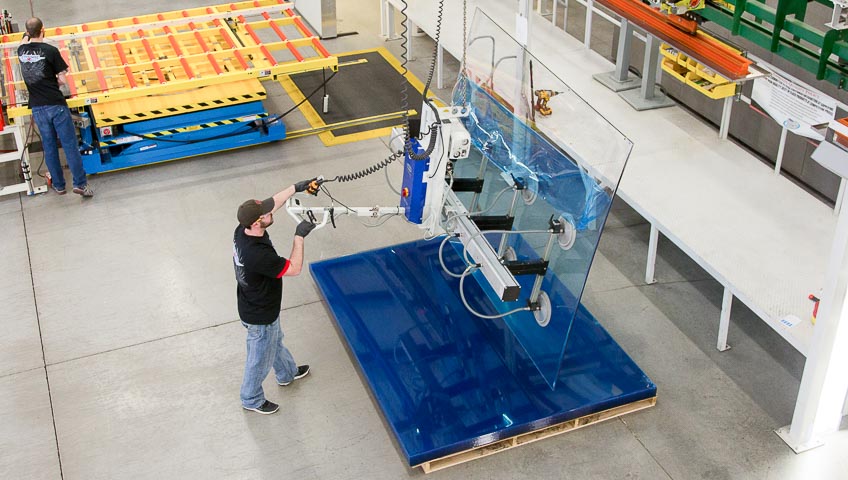 ApplicationHeavy Equipment GlazingCab windshields and side windows for excavators, bulldozers, skid steers, and articulating trucks.
 CapabilityThe Fusionite Coating LineWhy the coating grade is a separate specification line from the thickness, at every gauge.
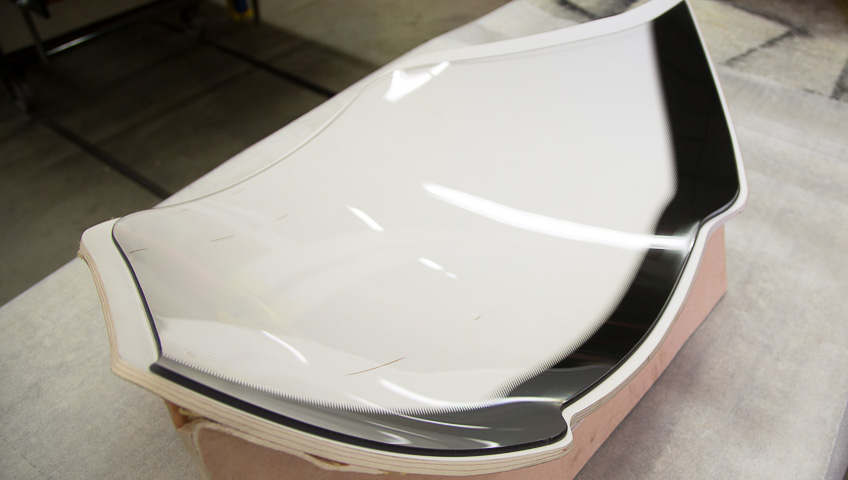 EngineeringDesign and PrototypingForming method, tooling, and process parameters selected from DXF and STEP geometry.
Validate Your Thickness and Coating Before You Commit
Contact Five Star Fabricating's engineering team to validate thickness and coating selections for your application, or to request a test data package for a specific Fusionite™ grade. Prototype from geometry data in two weeks.
Supporting OEM programs across heavy equipment, automotive, transit, and industrial machine guarding from specification review through production.